Tuesday, 24 March 2015

Portobello and Asparagus Strata.

Ingredients
1 tablespoon extra virgin olive oil
1 1/2 cups chopped yellow onion,
1/4 teaspoon dried thyme
3 cloves garlic, finely chopped,
1 package mushrooms, thinly sliced.
1/2 pound asparagus, trimmed and cut into 1-inch lengths,
1 teaspoon salt,
8 eggs,
1 cup milk,
1/2 cup grated parmesan,
2 tablespoons Dijon mustard,
3 tablespoons chopped parsley,
Black pepper to taste,
5 cups cubes sourdough bread,
4 ounces herb or plain goat cheese crumbled, feta.

Here’s what you do:

Heat oil in a large skillet over medium heat.
Add onions and thyme and cook until softened, about 4 minutes.
Add garlic, mushrooms, asparagus and 1/2 teaspoon of the salt and cook 5 more minutes longer.
Set aside.
Meanwhile, whisk together eggs, grated cheese, milk, mustard, parsley, pepper and remaining 1/2 teaspoon salt in a large bowl.
Set aside.
Spread half of the bread over the bottom of a lightly greased 9-x13-inch baking dish.
Top with half of the mushroom mixture and a third of the goat cheese.
Layer with remaining bread and mushroom mixture, and pour egg mixture evenly over the top.
Cover strata and chill overnight.
Preheat oven to 190C.
Remove strata from refrigerator and bring to room temperature while the oven heats.
Sprinkle remaining two-thirds cheese over the top and bake until firm in the center and golden brown on top, about 45 minutes.
Let rest 10 minutes before serving.
Buon Appetito!

Butternut-squash strata.

Butternut-squash strata recipe - Telegraph:
1kg butternut squash
4 tbsp olive oil
40g sourdough bread, crust removed
450ml full-fat milk
6 large eggs, lightly beaten
250g fresh ricotta
about 15 sage leaves
generous grating of nutmeg
60g parmesan or pecorino, grated
1 onion, finely chopped
2 cloves garlic, finely chopped
200g bacon lardons
125g buffalo mozzarella, drained and torn

Preheat the oven to 200°C/gas mark 6.
Halve, peel and deseed the squash.
Cut into wedges about 2.5cm thick.
Put into a roasting-tin, drizzle with 2 tbsp of the olive oil and season. Roast for about 30 minutes, until tender and slightly caramelised.
Allow to cool.

Turn the oven down to 180°C/gas mark 4.

Meanwhile, tear the bread into small chunks and mix with the milk, eggs and ricotta. Mash lightly.
Chop half the sage leaves and add to the mixture with the nutmeg and 25g of the parmesan or pecorino.
Season.
Cover and refrigerate.

Sauté the onion in 1 tbsp olive oil until soft.
Add the garlic.
Cook for a minute.
Scrape into a bowl.
Set aside.
In ½ tbsp oil, sauté the bacon until golden.
Lift on to kitchen paper to soak up excess fat.
Lightly oil or butter a 2l gratin or pie dish.
Put half the bread and milk mixture into it.
Add half the pumpkin, all the mozzarella, and half the bacon and onions. Ladle on the rest of the bread mix, pumpkin, bacon and onions.
Sprinkle on the remaining cheese.
Leave to sit for half an hour (for a lighter strata).

Put the dish into a roasting-tin and fill the tin with boiling water a third of the way up the sides of the dish.
Cook for about 1 hour.
It should be just set in the middle.
Heat the last ½ tbsp oil until very hot and fry the remaining sage until crisp (a few seconds), then scatter on the top.
Serve immediately with a green salad.
'via Blog this'

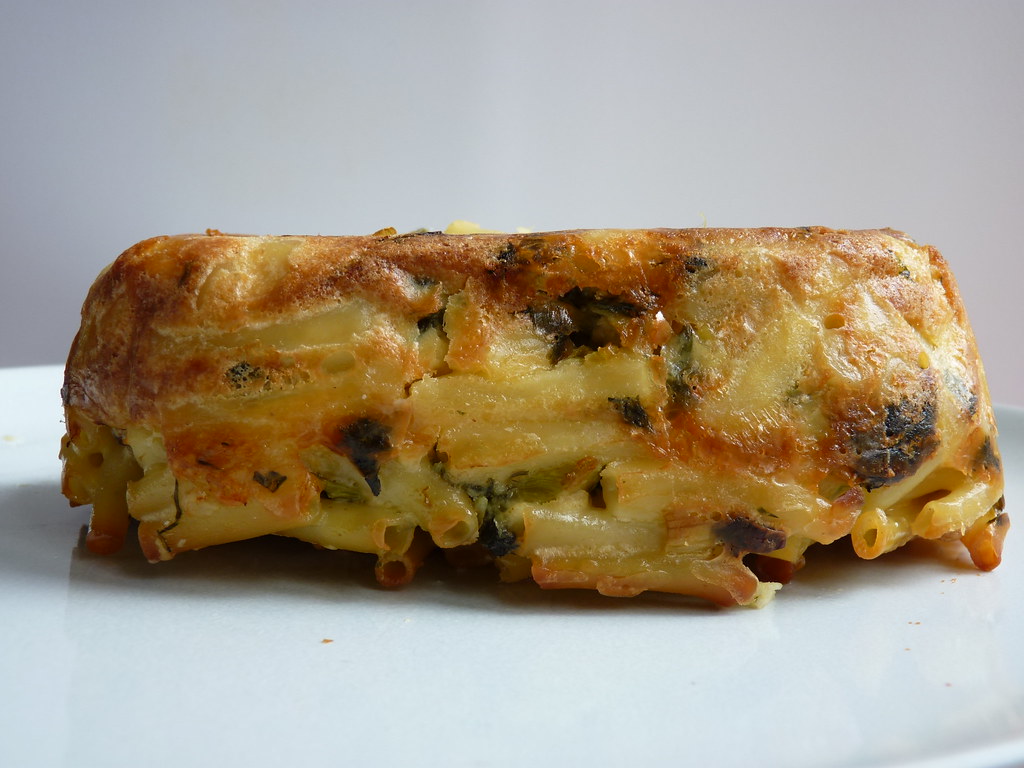
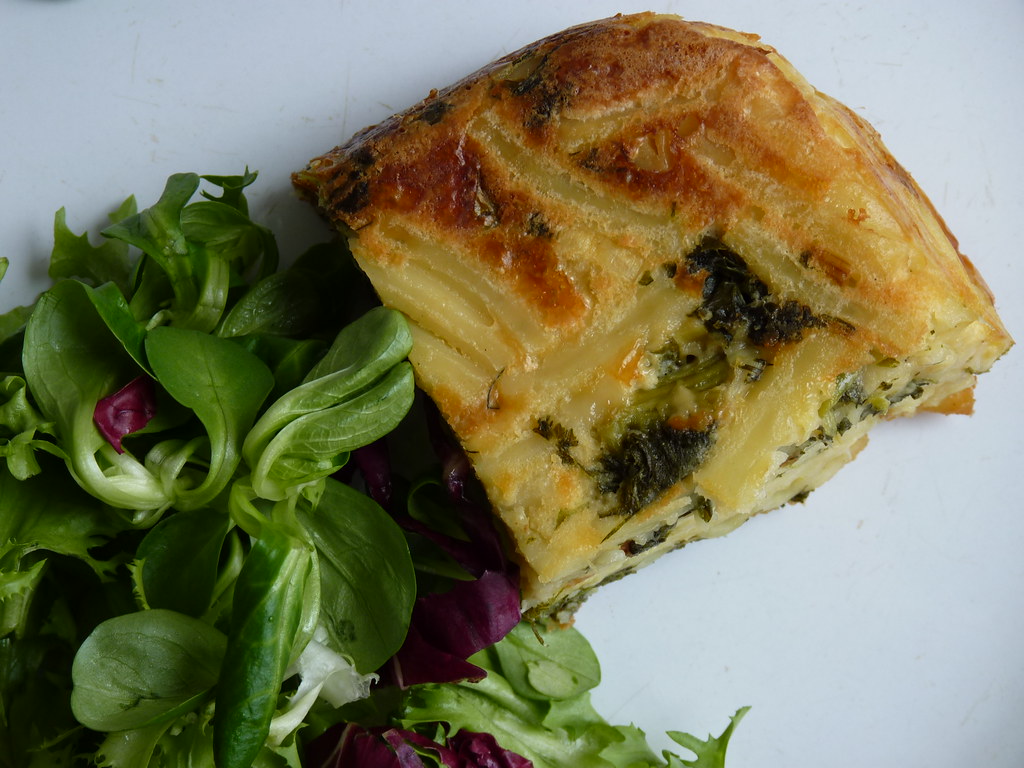
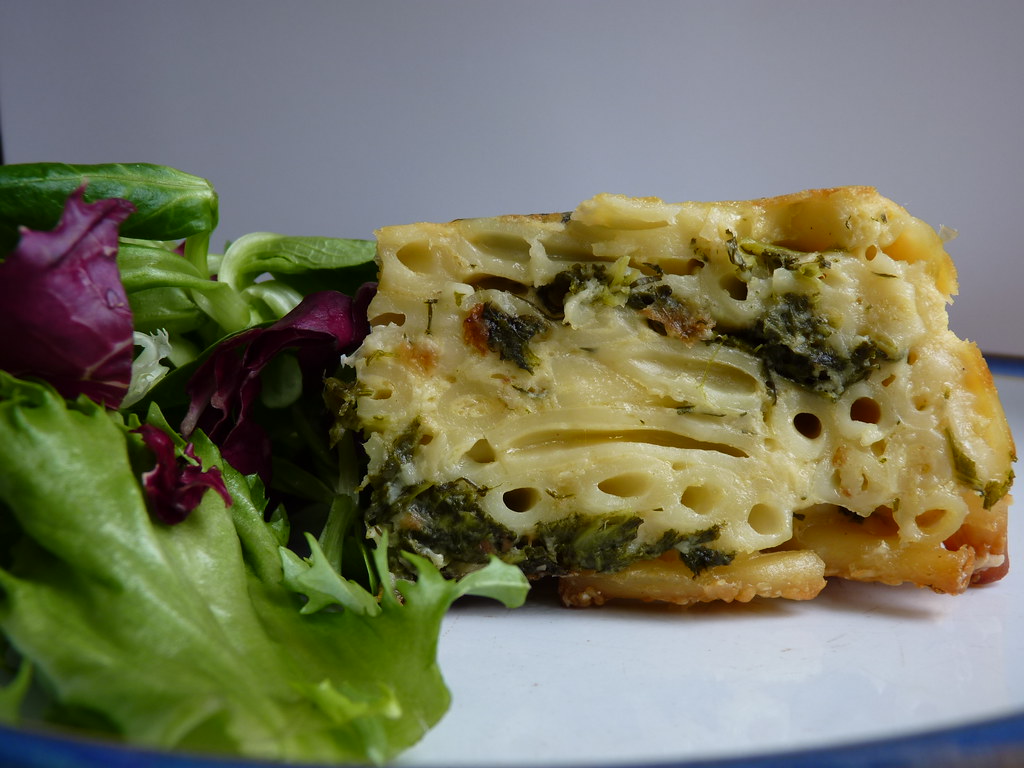
Three Cheese and Swiss Chard Pasta Bake Cake.


1. 

2. 

3. 

Monday, 23 March 2015

How to Make Breakfast Strata.

How to Make Breakfast Strata: 14 Steps (with Pictures) - wikiHow:
Sausage-Kale Breakfast Strata | The Pioneer Woman Cooks | Ree Drummond:
Strata or stratta is a family of layered casserole dishes in American cuisine.
The most common modern variant is a brunch dish, similar to a quiche or frittata, made from a mixture which mainly consists of bread, eggs and cheese.
It may also include meat or vegetables.
The usual preparation requires the bread to be layered with the filling in order to produce layers (strata).
It was popularized in the 1984 Silver Palate Good Times Cookbook by Julee Rosso and Sheila Lukins.
Other recipes merely require that the ingredients are mixed together, like a savory bread pudding.
A beaten egg mixture is then poured over the ingredients.
The dish requires a rest of anywhere between one hour and overnight before it is baked. It is served warm.

Place the pan in the refrigerator for at least one hour. The strata can also be assembled the night before and refrigerated until morning.
The longer the strata is left assembled but uncooked, the more the bread will absorb the custard.


Bake the strata at 180°C until the custard is set in the center: 40-50 min.
The cooking time will be dictated by how deep a pan you are using; shallower pans cook faster than deeper ones.

Strata is basically a savory bread pudding.
...mainly consists of bread, eggs and cheese.
It's generally made with slices of crusty Italian bread and toppings of cheese plus vegetables and meat.
It's then soaked in a custard and baked until set and puffy.
I've always loved it, but only just out of the oven when really hot and fluffy.
As it cools, it settles and becomes more dense, but still very tasty.
'via Blog this'

Фритта́та.

Frittata? or Strata.
Фритта́та (фритата; итал. frittata) — итальянский омлет, который готовят с начинками из сыра, овощей, колбасы или мяса. Обычно фриттату готовят на плите, затем доводят до готовности в духовке.

Неаполитанскую фриттату часто готовят с использованием макарон.
Традиционная крестьянская фриттата содержит лук-порей и сыр пармезан.
Во фриттату не добавляются продукты, содержащие большое количество жидкости.
Например, если вы хотите добавить помидоры, их сначала следует разрезать, избавить от семян и жидкости, потом дать полежать в сухом месте 15-30 минут, и только после этого использовать для приготовления этого блюда.
Сегодня итальянскую фриттату готовят в сковороде с двумя ручками, специально созданной под это блюдо.

Готовится фриттата на медленном огне.
Взбитые яйца заливаются на дно смазанной маслом сковороды, затем кладется начинка.
Когда нижний слой фриттаты начинает запекаться, сковороду можно закрыть крышкой и довести до готовности на медленном огне, либо можно сковороду поместить в духовку.
«Фриттата»: итальянский омлет (Frittata) | Кулинарные рецепты от «Едим дома!»:

Giant Veg Rosti.

Giant Veg Rosti:
- http://www.jamieoliver.com/recipes/vegetables-recipes/giant-veg-r-sti/
Rösti or röschti is a Swiss dish consisting mainly of potatoes, in the style of a fritter.
This is a particularly good breakfast, brunch or lunch.
I suppose it's not technically a traditional square meal as we often see it, but it's fulfilling, a lovely contrast of textures and flavours, and a total pleasure to eat.
Roasting the spuds and carrots to create the giant rösti really brings out their sweetness, and builds up a nice crunchy edge.

Ingredients
600 g potatoes
3 large carrots
1/2 teaspoon Dijon mustard
1/2 a lemon
extra virgin olive oil
olive oil
100 g frozen peas
100 g baby spinach
4 large free-range eggs
50 g feta cheese

Cooking method:
Preheat the oven to 180°C/350°F/gas 4.
Peel the potatoes and carrots, then coarsely grate them in a food processor or by hand on a box grater.
Add a good pinch of salt, toss and scrunch it all together, then leave for 5 minutes.
Meanwhile, mix the mustard, a good squeeze of lemon juice, and a couple of lugs of extra virgin olive oil with a little pinch of salt and pepper in a medium bowl and put aside.

Drizzle a really good lug of olive oil into a large bowl and add a good pinch of pepper.
Handful by handful, squeeze the potato and carrot mixture to get rid of the excess salty liquid, then sprinkle into the bowl.
Toss in the oil and pepper until well mixed, then evenly scatter it over a large oiled baking tray (roughly 30cm x 40cm).
Roast for around 35 minutes, or until golden on top and super-crispy around the edges.

Meanwhile, blanch the peas for a minute in a large pan of boiling salted water, then scoop out, add to the bowl of dressing and pile the spinach on top.
Just before your rösti is ready, with the water gently simmering, crack in the eggs, poach to your liking, then carefully remove with a slotted spoon. Serve the rösti with the eggs on top. Quickly toss the salad together to dress it and scatter in piles on the rösti, then crumble over the feta and serve. I like to whack it in the middle of the table and let everyone dig in.

Jamie's Tip: Poached eggs can be a little tricky to get right, so use the freshest eggs you can get your hands on.
You can tell whether an egg is fresh by cracking it on to a saucer.
If the yolk stands up and the white isn't watery, it's fresh as a daisy.
And don't worry if they look a little messy round the edges, it's all part of it!
'via Blog this'

Carrot, Cumin and Barley Stew.

Kew on a Plate - Carrot, Cumin and Barley Stew - Raymond Blanc OBE:
For the carrots
500ml Carrot juice
100ml Water
1 large pinch Sea salt
1 tsp Ground cumin
6 Carrots (ideally Early Nantes), skin on, scrubbed, halved lengthways then cut into 1cm slices at an angle
For the barley
2 tbsp Rapeseed oil
80g White onion (about ½ medium), chopped
2 Passilla Bajio chillies, deseeded and finely chopped
150g Pearl barley
1 tsp Ground cumin
1 Corn cob, cooked in boiling water for 20 minutes, covered
4 Rainbow chard leaves, rolled and chopped; stems cut into 3cm pieces
3 Spring onions, finely sliced
1 small bunch Coriander, chopped
1/2 Lemon juice
To finish
1½ tbsp Rapeseed oil
Micro coriander (optional)

Cooking Method

For the carrots
In a large saucepan on a medium heat, bring the carrot juice and water to the boil, then add the salt and cumin. Add the carrots and simmer gently for 10 minutes until they are cooked through. Remove from the heat, scoop out the carrots and reserve the cooking liquor.

To cook the barley
In a medium saucepan on a medium heat, add the oil and sweat the onions and chilli for 5 minutes, covered with a lid, until softened. Stir in the barley and cumin and continue to sweat for 1 minute. Add 500ml of the carrot cooking liquor to the pan, bring to a gentle simmer, then cover with a lid and cook for 50–55 minutes, stirring from time to time, until the barley swells and is firm with a good bite. Check the texture, taste and check the seasoning, and cook for a few minutes more, if necessary. Set aside in the pan.

To finish the barley risotto
Using a long knife, carefully cut the kernels off the corn cob by running a knife along the central core. Keep four of the biggest lengths intact to use as garnish. Set these aside then release the kernels from the rest. Add the chard stems and leaves, spring onions and loose corn kernels to the barley pan and stir, then place the pan back on a medium heat and cook for 12 minutes. Add the coriander and cook for 1 minute until wilted. Finally, taste and adjust the seasoning if required, then add the lemon juice to sharpen the flavour.

To finish
In a medium frying pan on a medium heat, fry the cooked carrot pieces in the rapeseed oil for 6–7 minutes, until caramelised. Add the reserved pieces of sliced corn to the pan and cook for 3 minutes until they begin to brown. Spoon out the caramelised carrots, add them to the barley risotto and divide the risotto evenly between four plates. Finish with a length of sliced corn and micro coriander, if using. Serve immediately.
'via Blog this'

How to make the perfect stew.

How to make the perfect stew - Jamie Oliver | Features:

'via Blog this'

How To Cook Perfect Basmati Rice.

How To Cook Perfect Basmati Rice — Cooking Lessons from The Kitchn | The Kitchn:
5 Tips for Perfect Basmati Rice
- Use the best quality Indian or Pakistani basmati rice you can find and afford. I personally use Tilda, but there are several other good quality brands available.

- Rinse the rice for a few minutes. The water does not need to run perfectly clear, like when rinsing Japanese rice, but rinsing helps get rid of starch that can make your rice sticky.

- Add salt to the rice in the pot, before pouring in the water. This helps the salt absorb into the rice grains. Do not add salt after the rice is cooked, as your rice can taste overly salty.

- I like to pour boiling water over top of the rice in the pot, which helps me keep track of the exact quantity of water I need, and there is no loss of water due to evaporation in my pot.

- Use a tight fitting lid, or ideally, use aluminum foil, crimped tightly over the top of the pot to make a good seal, so that steam doesn't escape. The tightly covered pot lets the rice steam perfectly, and the method consistently yields long, separate, perfectly steamed fluffy grains of rice. So, bring to a simmer, then cover with foil and the lid

My mother recommends adding a few drops of plain vinegar (or lemon juice) to the pot with the rice to help keep the grains separate.
'via Blog this'

Sunday, 22 March 2015

Polenta.

Polenta Versus Grits: What's the Difference? | The Kitchn:
Polenta Versus Grits: What's the Difference? How to Make Creamy Stovetop Polenta.
Anson Mills founder Glen Roberts is quoted in the piece describing the difference as he sees it: while both grits and polenta are made from stone-ground cornmeal, "Southern grits and Italian polenta are traditionally made from two vastly different types of corn.
How many times it's milled and the fineness of the grind also differ.
And then there's the taste and texture."

But in reality, the differences are relatively slim.
Buy coarse cornmeal at the store and call it a day.
And if you're out on the town and you like polenta, try ordering grits next time (and vice versa).
And yes, those morning grits with a poached egg at Cowgirl Creamery really are worth a trip.

Polenta, though, is not always made from corn, so the terminology does get a little confusing.
Sometimes it's made from semolina, and in some places it has ground buckwheat mixed with the cornmeal.
But in general, when you see "polenta" for sale, it's coarsely ground cornmeal.

How To Make Creamy Stovetop Polenta — Cooking Lessons from The Kitchn | The Kitchn:
Polenta is like risotto: it has a reputation for needing lots and lots and lots of stirring.
Well, we are lazy and fortunately Marcella Hazan's recipe enables us in that. (- 4 cups water/1 cup polenta. Bring water and salt to a boil in a 3-quart heavy saucepan, then add polenta in a thin stream, whisking. Cook over moderate heat, whisking, 2 minutes. Reduce heat to low and cover pan, then cook at a bare simmer, stirring with a long-handled spoon for 1 minute after every 10 minutes of cooking, 45 minutes total. Remove from heat and whisk in butter until incorporated.)
I find the cover-and-forget-it approach much easier to handle on a weeknight. This is a method most famously espoused by Marcella Hazan (and which we've talked about before), and I've adopted it wholeheartedly.
The idea is to get the polenta going by whisking coarse-ground polenta or yellow cornmeal into boiling water and stirring until it gets thick. Then you cover the pot and let the polenta cook while you go about making the rest of dinner. Every 10 minutes or so, uncover the pot and give it a good stir to make sure it's cooking evenly and the sides aren't drying out. Thirty to forty minutes later, your polenta is ready for the table.

A tense moment might come around the 15-minute mark. At this point, the polenta looks done. And indeed, if you taste it here and like it, by all means serve it! But if you let it cook for a little longer, you'll find that the polenta tastes sweeter and more deeply corn-like, and any last lingering grittiness from the ground corn smooths away. I love it at 30 minutes, but go a little longer if you have time or want a thicker polenta.

How to Make Creamy Stovetop Polenta
Makes about 4 cups
What You Need

Ingredients
4 cups water
1 teaspoon salt
1 cup polenta or yellow cornmeal
1 cup cheese (optional)
1-3 tablespoons butter (optional)

Equipment
3 Liters (8-12 cup) pot with lid
Whisk
Long handled spoon or sturdy spatula

Instructions
Bring the water to a boil.
Bring the water to a brisk boil over medium-high heat.
Add the salt.
Pour the polenta into the boiling water.
While whisking gently, pour the polenta into the boiling water in a steady stream.
Continue whisking until polenta is thickened.
Turn down the heat to low and continue whisking until the polenta has thickened enough that it doesn't settle back on the bottom of the pan when you stop stirring.

Cook the polenta 30-40 minutes.
Cover the polenta and continue cooking.
Stir vigorously every 10 minutes or so, making sure to scrape the sides, bottom, and corners of the pan.
Cook 30 minutes for softer porridge-like polenta or 40 minutes for thicker polenta.
Stir in cheese and butter, if using.
Serve immediately, or cover the pan and let it sit at the back of the stove for up to 15 minutes before serving.

Additional Notes:
Leftover Polenta: Polenta will solidify into the shape of the container in which you store it. Leftover polenta can be sliced or cubed before being roasted, grilled, or deep-fried. To make it creamy again, warm it with a little broth, milk, or water, and stir vigorously. It won't be quite as creamy as it was originally, but it should still be pourable.

More: Cornmeal and grits: the real nitty-gritty - Telegraph:
Spoonbread (see recipe below) uses cream instead of the more common buttermilk, and three eggs instead of one, which makes it a custardy soufflé. Like polenta and grits, spoonbread works wonderfully as a side dish with game such as venison or duck, and with stews – anything with a thick gravy. The cornmeal sold in most supermarkets is too hard, and makes very dry, gritty cornbread. If I have run out of cornmeal from the US I use a mixture of Sala Cereali’s white maize polenta flour (about 80 per cent) and the Cool Chile Company’s masa harina (20 per cent), a traditional flour used to make tortillas and tamales.
Sala Cereali products are available from many grocers and from guidetti.co.uk. The Cool Chile Company’s products are available from Sainsbury’s and coolchile.co.uk.
Anson Mills (ansonmills.com) ships products to Britain

Или мамалыга.

'via Blog this'