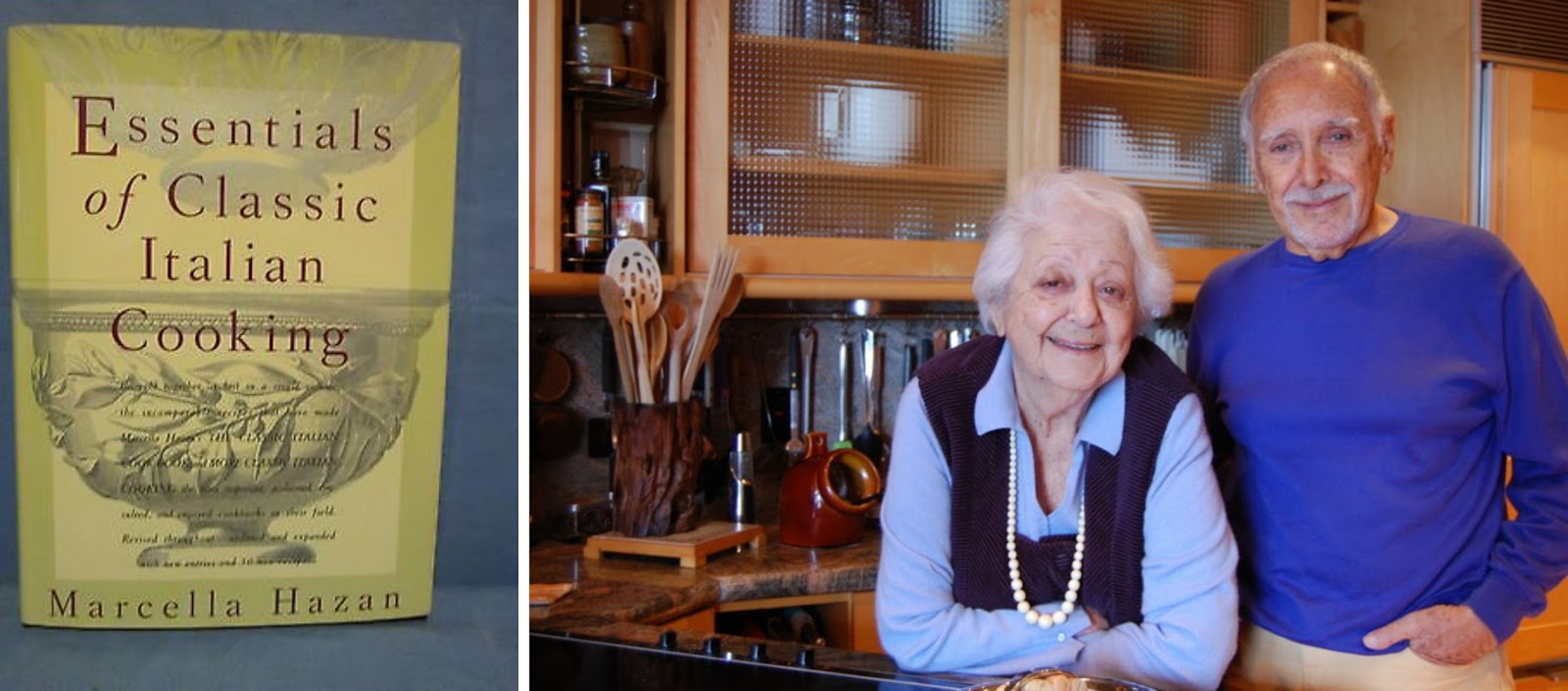
Fresh tomato sauce. Sugo fresco di pomodoro.
By Marcella Hazan (April 15, 1924 – September 29, 2013) .
Ruth Rogers (Ruth Rogers, 64, is a chef and co-founder of the River Café restaurant in London.):
'People are always putting yet another ingredient into pasta dishes but for me, and for most Italians, the simplest tomato pasta sauce is always the best.
My husband is Italian and that's what he loves the most.
When we entertain, which isn't very often, people always expect a fancy meal but I often make this dish because it's the nicest dish there is.
The trick is to slow-cook the tomato and if you are using cans of tomato make sure you get rid of the excess juice.
This is a fabulous recipe.
Enjoy.'
Serves 6
450g pasta
6 tbs extra virgin olive oil
2 medium garlic cloves, peeled and sliced very thinly
300g tinned Italian peeled plum tomatoes, cut into large pieces,
with their juice
salt
black pepper in a grinder
10 fresh basil leaves, torn by hand into small pieces
Put the oil and garlic in a saucepan and turn the heat to medium.
When the garlic becomes coloured a pale gold, add the tomatoes and turn the heat down to very low.
Cook, uncovered, until the oil floats free of the tomatoes, for about 20 minutes.
Add salt and grindings of pepper and cook for another two to three minutes, stirring from time to time.
Off the heat, stir in the torn basil leaves.
Chef's note: The special taste of the sauce depends largely on the way the garlic is handled.
It must be sliced very thinly, sautéed only until it becomes just faintly coloured, and then allowed to simmer slowly in the tomato so that it can release all its sweetness.
Raw basil at the end contributes a fragrant fillip.
Make sure the basil does not undergo any cooking.
The sauce can be cooked several hours in advance.
Add the basil after reheating, as serving.
Or:
- Marcella Hazan's Bolognese Sauce Recipe - NYT Cooking
- Marcella Hazan’s Roast Chicken With Lemons Recipe - NYT Cooking
- Sugo di Pomodoro - Flavia's Flavors
By Marcella Hazan (April 15, 1924 – September 29, 2013) .
Ruth Rogers (Ruth Rogers, 64, is a chef and co-founder of the River Café restaurant in London.):
'People are always putting yet another ingredient into pasta dishes but for me, and for most Italians, the simplest tomato pasta sauce is always the best.
My husband is Italian and that's what he loves the most.
When we entertain, which isn't very often, people always expect a fancy meal but I often make this dish because it's the nicest dish there is.
The trick is to slow-cook the tomato and if you are using cans of tomato make sure you get rid of the excess juice.
This is a fabulous recipe.
Enjoy.'
Serves 6
450g pasta
6 tbs extra virgin olive oil
2 medium garlic cloves, peeled and sliced very thinly
300g tinned Italian peeled plum tomatoes, cut into large pieces,
with their juice
salt
black pepper in a grinder
10 fresh basil leaves, torn by hand into small pieces
Put the oil and garlic in a saucepan and turn the heat to medium.
When the garlic becomes coloured a pale gold, add the tomatoes and turn the heat down to very low.
Cook, uncovered, until the oil floats free of the tomatoes, for about 20 minutes.
Add salt and grindings of pepper and cook for another two to three minutes, stirring from time to time.
Off the heat, stir in the torn basil leaves.
Chef's note: The special taste of the sauce depends largely on the way the garlic is handled.
It must be sliced very thinly, sautéed only until it becomes just faintly coloured, and then allowed to simmer slowly in the tomato so that it can release all its sweetness.
Raw basil at the end contributes a fragrant fillip.
Make sure the basil does not undergo any cooking.
The sauce can be cooked several hours in advance.
Add the basil after reheating, as serving.
Or:
- Marcella Hazan's Bolognese Sauce Recipe - NYT Cooking
- Marcella Hazan’s Roast Chicken With Lemons Recipe - NYT Cooking
- Sugo di Pomodoro - Flavia's Flavors